0 artículo(s)
Ver cesta
No tiene artículos en su carrito de compras.


You're pricing out manhole covers for a utility project. Two quotes land on your desk: one for cast iron, one for composite. The cast iron is familiar — your municipality has spec'd it for decades. The composite is lighter, cheaper to ship, and the manufacturer claims a 50-year service life with zero corrosion maintenance.
Which do you choose?
The answer depends on where that cover is going, what's driving over it, and what's eating at it from below. The composite vs cast iron manhole cover debate isn't about one material being universally better. It's about matching the right material to the right application — and getting that wrong costs real money.
A standard 24-inch cast iron manhole cover weighs between 150 and 275 pounds, depending on load class. A 36-inch H-20 rated cover can push past 400 pounds. That's a two-person lift at minimum, often requiring mechanical assistance on deeper installations.
Composite covers of the same diameter weigh up to 70% less.
That weight difference isn't just about convenience. It changes the math on labor costs, reduces back injuries during routine inspections, and makes emergency access faster. For monitoring wells, sampling ports, and utility vaults that get opened frequently, the crew doing the work will tell you exactly which material they prefer.
Here's the counterintuitive part that surprises many specifying engineers: composite manhole covers can achieve H-20 and even H-25 load ratings. The AASHTO M306 standard requires a proof load of 40,000 pounds — applied through a 9-inch by 9-inch pad to the center of the cover — with a 2.5x safety factor over the 16,000-pound-per-wheel H-20 design load. Any cracks or permanent deformation greater than 1/8 inch means rejection.
Modern fiber-reinforced polymer (FRP) and sheet-molding compound (SMC) composites pass this test. Manufacturers now produce composite covers that meet or exceed H-20 and H-25 ratings when properly installed in reinforced concrete frames.
That said, "properly installed" is doing real work in that sentence. Composite covers depend on stable seating surfaces and correct bearing area more than cast iron does. A sloppy installation that a 250-pound cast iron cover might tolerate through sheer mass can cause premature failure in a lighter composite. If your crews are disciplined on installation specs, composite performs. If they're not, you'll hear about it.
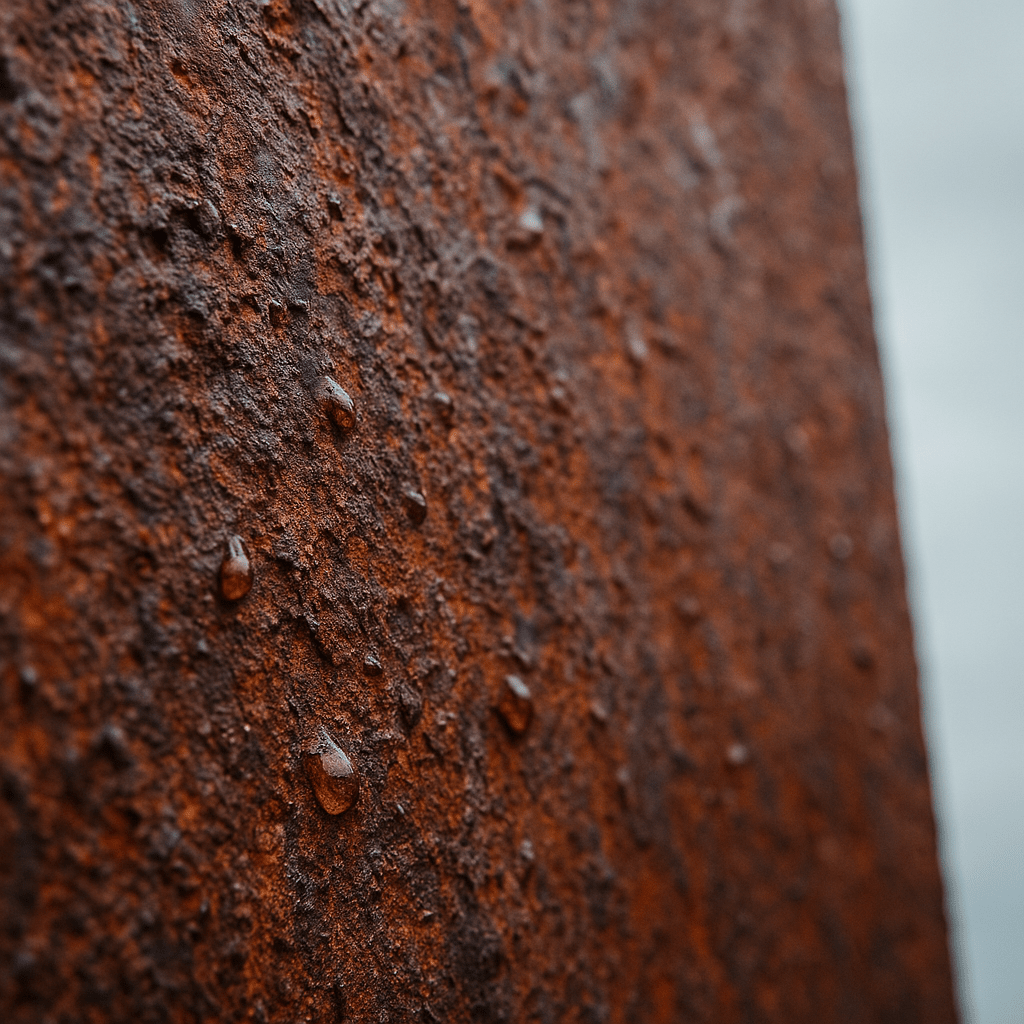
Cast iron has one fundamental vulnerability: it reacts with water and oxygen. In a benign, dry climate with low soil acidity, that oxidation takes decades to become structural. In aggressive environments, it can take far less.
Three environments accelerate cast iron failure dramatically:
Composite materials are chemically inert to all of these. No chloride attack. No H₂S degradation. No acid erosion. The fiber-reinforced polymer matrix doesn't rust, doesn't need cathodic protection, and doesn't require coating renewal. In a wastewater treatment plant or a coastal utility vault, composite isn't just a good option — it's the obvious one.
A cast iron manhole cover weighing 250 pounds has a scrap value of roughly $15 to $30 at current rates (cast iron scrap trades at approximately $0.06–$0.13 per pound nationally). That might sound trivial. It isn't.
In cities across the U.S. and globally, manhole cover theft remains a persistent infrastructure headache. Mexico City reported spending over $2 million USD on replacements over a three-year period due to theft alone — not counting installation labor, traffic management, or liability from open manholes. Domestically, municipalities report individual replacement costs of $500 to $2,000 per cover when you factor in materials, labor, and traffic control.
Composite covers carry zero scrap metal value. No one is prying up a composite lid at 2 AM to take to a scrap yard. Anti-theft locking mechanisms add 25–40% to the cost of a cast iron cover; composite achieves theft resistance simply by being worthless as scrap. In theft-prone areas — urban corridors, remote utility access points, parks — the composite vs cast iron manhole cover decision may come down to this single factor.
Cast iron, when maintained, delivers a proven service life of 25–50+ years in favorable conditions. The key phrase is "when maintained." Repainting, rust treatment, and periodic inspection for structural integrity all carry costs. In corrosive environments, replacement cycles shorten significantly.
Composite covers are engineered for 50+ year service with functionally zero maintenance. No repainting, no rust treatment, no cathodic protection. UV-stabilized formulations resist degradation from sun exposure, and the non-conductive material eliminates galvanic corrosion concerns when installed near dissimilar metals.
The upfront price of a composite cover is often comparable to or slightly higher than cast iron for equivalent load ratings. But the total cost of ownership — factoring in maintenance, labor for heavier covers, and replacement frequency in corrosive environments — favors composite in most non-roadway applications.
Cast iron isn't going anywhere. For certain applications, it remains the right call:
For a main arterial road in a temperate climate with standard municipal specs? Cast iron. Don't overthink it.
Composite covers earn their place in applications where their material advantages align with the environment:
For a coastal utility vault with no vehicle traffic? Composite every time.
This decision doesn't happen in a vacuum. The American Society of Civil Engineers' 2025 Infrastructure Report Card gave U.S. wastewater systems a D grade and drinking water infrastructure a D+. The U.S. water utility sector faces an estimated $110 billion funding gap — nearly 60% of utilities' overall spending needs. That gap is projected to reach $194 billion by 2030.
When budgets are this tight, material selection matters more, not less. Choosing a cover that fails prematurely or requires ongoing maintenance in a corrosive environment isn't just an engineering mistake — it's a budget mistake. And a single deteriorated manhole with just one inch of standing water over a leaky chimney seal can allow over 1,000 gallons of inflow per hour during a storm event, adding thousands in unnecessary treatment costs annually.
The composite vs cast iron manhole cover choice is ultimately about matching material properties to environmental demands. Both materials have earned their place in infrastructure. The question is whether you're deploying each one where it performs best.
| Factor | Hierro fundido | Compuesto |
|---|---|---|
| Weight (24" cover) | 150–275 lbs | 45–85 lbs |
| H-20 Rated | Yes (standard) | Yes (select models) |
| Corrosion Resistance | Moderate (requires maintenance) | Excellent (inherent) |
| Scrap/Theft Value | $15–$30 per cover | None |
| Maintenance | Periodic repainting/treatment | Essentially zero |
| Best Environment | Temperate, roadway, traffic | Coastal, corrosive, chemical |
| Service Life | 25–50 years (maintained) | 50+ years |
EDP stocks both cast iron manhole covers from EMCO Wheaton and composite options across a range of sizes and load ratings. If you're spec'ing a project and need help matching the right cover to your application — or if you're comparing the composite vs cast iron manhole cover tradeoffs for a specific site — give us a call. We'll walk through the specs, the environment, and the budget, and help you land on the right material. That's what a boutique supplier does.